International Regulations and Food-Contact Flexible Packaging

INTERNATIONAL REGULATIONS AND FOOD-CONTACT FLEXIBLE PACKAGING
THE IMPACT ON THE FORMULATION AND APPLICATION OF LAMINATION ADHESIVES
Extended Technical Assessment and Recommendations
Flexible packaging technologies, which play a critical role in food safety, storage, and logistics, have emerged as the most significant factor affecting end-consumer health after food production itself. In building flexible packaging systems, lamination adhesives are used to bond together different polymeric or metallic film layers. Ensuring adequate bond strength between polymer film combinations (such as PET/PE or OPA/CPP), maintaining mechanical integrity, and preserving barrier properties all depend directly on the chemical structure and performance of the adhesive systems employed. However, these adhesives — whether in direct or indirect contact with food — carry the risk of transferring harmful chemicals into food through a process known as "migration."
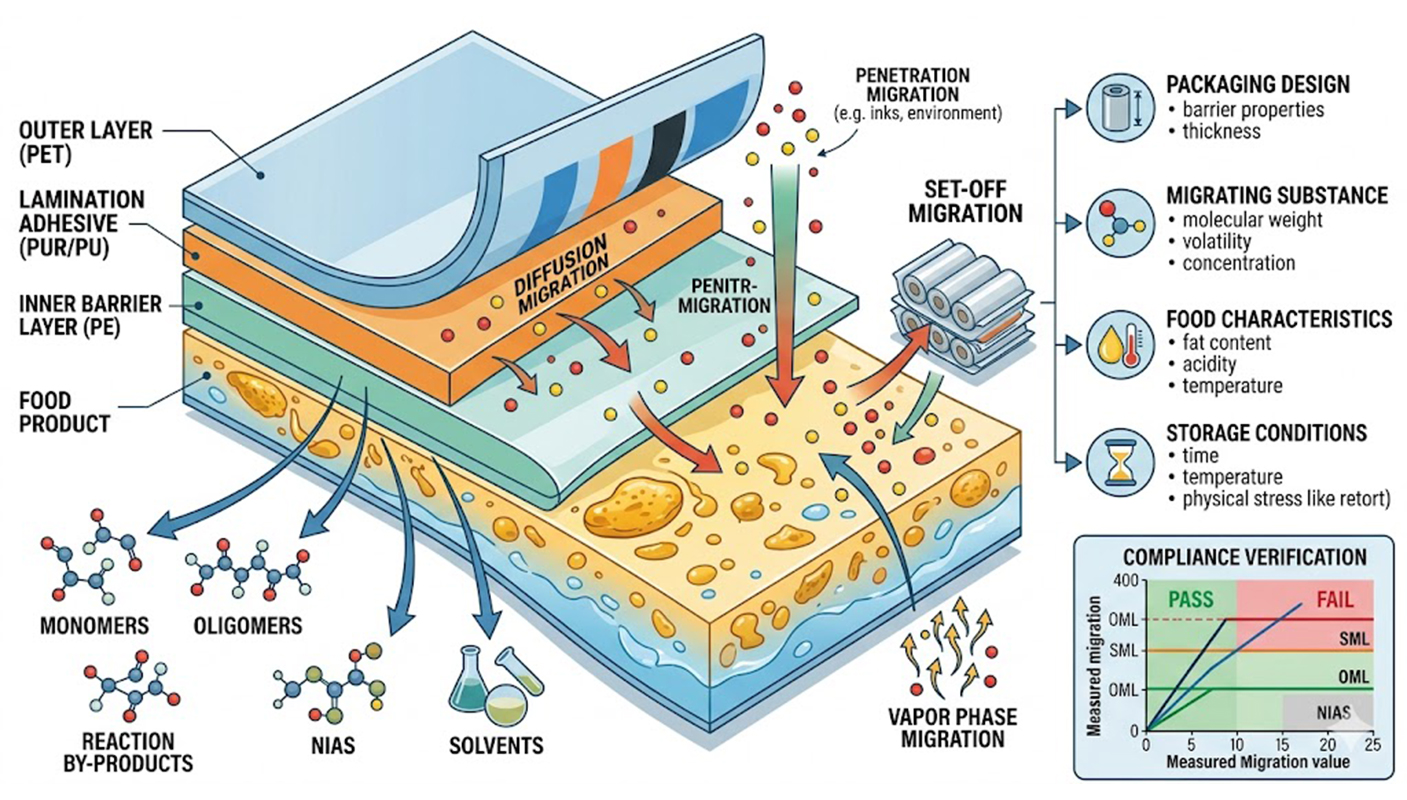 Figure 1. Migration mechanism from lamination adhesive to food
In flexible packaging systems, even when lamination adhesives are not in direct contact with food, the migration process occurring at the molecular level remains a critical safety parameter. As illustrated above, the chemical transfer from the adhesive between packaging layers toward the food is governed by the polymer film barriers, the chemical structure of the adhesive, and the properties of the food itself (acidity, fat content, etc.). This mass-transfer mechanism forms the basis for restrictions such as SML (Specific Migration Limit), OML (Overall Migration Limit), and NIAS (Non-Intentionally Added Substances).
Food-contact packaging systems are subject to strict legal regulations aimed at protecting human health. Among these, the European Union’s Regulation (EC) No 1935/2004 framework regulation, Regulation (EU) No 10/2011 on plastic materials, the regulations enforced by the U.S. Food and Drug Administration, and the communiqués issued under the Turkish Food Codex are the most prominent. These regulations limit migration from packaging components, assess the safety of the chemicals used, and provide manufacturers with comprehensive compliance criteria. Today, such regulations have evolved beyond merely establishing limits — they have become a determining factor in product development processes.
The most fundamental transformation in the flexible packaging sector in recent years is the shift from traditional multi-layer laminated structures (such as PET/PE, OPA/CPP) to mono-material packaging systems (mono-PE, mono-PP) composed of a single polymer family. This paradigm shift is driven by mounting environmental pressure and tightening regulation. Instruments such as the European Union’s Circular Economy Action Plan and the new Packaging and Packaging Waste Regulation (PPWR) mandate that all packaging be recyclable by 2030 and set specific per-capita packaging-waste reduction targets across member states. Traditional multi-material structures, because different polymer types are irreversibly bonded together, cannot be separated during mechanical recycling and instead yield low-quality secondary raw materials (downcycling) or are diverted directly to waste. Mono-material structures, by contrast, contain a single polymer type and thus enable high-purity recyclability. This transition, however, creates a paradoxical challenge for lamination adhesives: an adhesive that must deliver excellent bonding throughout the packaging’s shelf life is now also expected to lose that bond under recycling-facility conditions (hot alkaline washing or solvent action), allowing the layers to separate readily. Consequently, waste legislation and extended producer responsibility (EPR) schemes are pushing the industry to develop an entirely new generation of adhesive formulations — addressing not only food safety (migration) but also end-of-life performance.
The sections that follow provide a comprehensive review of the national and international regulations currently affecting — and expected to affect — adhesives used in the flexible packaging sector, together with their concrete impact on adhesive chemistry, curing processes, and compliance certification, and conclude with actionable recommendations for the industry.
EU Packaging and Packaging Waste Regulation (EU) 2025/40
Effective as of August 12, 2026 across all EU member states, this regulation’s primary objective is to ensure the environmental sustainability of packaging across its entire life cycle, make recycling processes more effective, and render all packaging recyclable by 2030. To this end, the regulation targets a reduction in per-capita packaging waste of 5% by 2030, 10% by 2035, and 15% by 2040, relative to 2018 levels.
In line with these objectives, lamination adhesives used in the packaging sector are expected to meet the following requirements:
• The adhesive must be capable of separating from the substrate during the recycling process
• Washable adhesives are preferred, as they leave no residue
• Adhesive residues must not degrade the quality (purity) of secondary raw materials
• The adhesive must not impede manual or mechanical separation
• The total heavy-metal limit must not exceed 100 mg/kg (lead, cadmium, mercury, hexavalent chromium)
• The total PFAS content limit must not exceed 250 ppb
Of these criteria, the PFAS and heavy-metal limits are the first to be enforced. Over the longer term, a new generation of lamination adhesives must be designed that can be readily separated by washing or thermal treatment, leaving no residue on the separated film.
Packaging design will also move toward simplification. Because next-generation flexible packaging aims to minimize adhesive use wherever possible, the industry is targeting a minimum number of layers and minimum adhesive coat weight per square meter. While high bond performance is still expected during normal use, an adhesive formulation is required that can be easily separated — without leaving residue — under heat and solvent action during recycling. When developing such formulations, the use of chemicals harmful to health, such as PFAS, heavy metals, and halogens, must be categorically avoided.
With the European Union’s new standards for flexible food packaging, both film producers and adhesive manufacturers now face an obligation to undertake new R&D initiatives. The goal of this work should be to bring to market a next generation of recyclable or recycled products that are safe for the environment and human health.
U.S. Food-Contact Regulations: U.S. Food and Drug Administration (FDA – 21 CFR)
The FDA, authorized by the U.S. government to regulate food-contact packaging, establishes requirements under Title 21 of the Code of Federal Regulations (21 CFR). Under this framework, lamination adhesives — even when not in direct contact with food — are classified as indirect food additives and are subject to strict requirements. Because of the potential for migration, every component making up the adhesive (monomers, oligomers, additives, solvents) must comply with the regulation. Migration scenarios must be developed for the packaging system, tests conducted within those scenarios, and the resulting data declared by the manufacturer through the Food Contact Substance (FCS) notification system. Raw materials used in adhesive manufacturing must likewise be selected from among the substances permitted under this regulation. Unlike the European framework, the FDA system does not rely on a single positive list; instead, separate sections govern each type of component — for example, 21 CFR 175 (Adhesives & Coatings), 21 CFR 176 (Paper & Board), and 21 CFR 177 (Polymers). Once the adhesive has been manufactured using permitted chemicals, a safety assessment must still be performed that accounts for reaction by-products, incompletely cured oligomers or monomers, and radical or thermal degradation mechanisms.
While this approach grants manufacturers greater latitude, it correspondingly increases their responsibility. Severe sanctions — including product recall — apply to packaging that fails to meet these criteria, which helps ensure effective enforcement of the regulation.
Swiss Regulation: Swiss Ordinance (SR 817.023.21)
Known as the Swiss Ordinance SR 817.023.21 (Ordinance of the FDHA on Materials and Articles Intended to Come into Contact with Food), Switzerland’s food-contact regulation is among the strictest and most technically detailed frameworks currently in force — particularly for printing inks and lamination systems. The composition of lamination adhesives falls squarely within its scope.
The Swiss Ordinance’s most distinctive feature is that it combines a positive list with a mandatory NIAS (Non-Intentionally Added Substances) assessment. While substances permitted under Annex 2 may be used freely, any substance not on the list requires toxicological testing and risk assessment. Low-molecular-weight monomers or oligomers used during synthesis and production, photo initiators, potential reaction by-products, components not incorporated during curing, and unintentionally formed thermal degradation products are all subject to close scrutiny under the NIAS assessment. The presence of a barrier layer does not eliminate the need for such testing; in particular, the use of thin films such as OPP/CPP, and processes such as retort sterilization, can increase the number of tests and analyses required.
In short, under the Swiss Ordinance approach every component of a packaging system — ink, adhesive, film, and so on — is checked against the positive list; any component not on the list must undergo NIAS analysis. Developing a Swiss-compliant lamination adhesive is therefore more demanding and time-consuming than achieving FDA compliance, but when the process is managed correctly, it results in compliance with one of the highest standards recognized worldwide.
Turkish Regulation: Turkish Food Codex
In Turkey, substances and materials intended to come into contact with food are regulated by the Ministry of Agriculture and Forestry through the “Turkish Food Codex Regulation on Materials and Articles Intended to Come into Contact with Food” (Official Gazette No. 30382, dated April 5, 2018). For plastic-based materials, the “Turkish Food Codex Communiqué on Plastic Materials and Articles Intended to Come into Contact with Food” (Official Gazette No. 30989, dated December 25, 2019) also applies. This communiqué was drafted largely in alignment with the EU’s Regulation (EU) No 10/2011 on plastic materials, and its lists of permitted starting substances/monomers are revised periodically in line with EU updates (e.g., 2019/1338, 2020/1245, 2023/1442, 2023/1627).
For lamination adhesives, the practical implication is as follows: manufacturers producing in Turkey or supplying the Turkish market effectively use the EU positive list as their reference point, but must separately track domestic effective dates, transition periods, and facility registration/declaration obligations. Traceability requirements, written declarations of compliance (together with supporting documentation to be produced on request by the Ministry), and labeling/facility-registration-number obligations introduce additional administrative requirements not found in EU legislation. Export-oriented manufacturers are therefore advised to include the current text of the Turkish Food Codex communiqué as a separate compliance checkpoint within their formulation approval process, alongside EU/FDA/Swiss compliance.
RecyClass Certification
The RecyClass Recyclability Methodology is a framework that establishes transparent, science-based principles and evaluation methods for determining the recyclability of plastic materials and guiding the design of products compatible with existing recycling infrastructure. Unlike other food-contact packaging regulations, RecyClass certification is concerned not with food safety but with the recyclability of the components used in a packaging system.
Under the RecyClass methodology, the ability of multi-layer structures to separate cleanly is critical to recyclability — a factor that is driving a fundamental shift in the design of the adhesives that bond those layers together. Adhesives currently in use bond layers together in a non-recyclable manner, and in most packaging systems this characteristic has traditionally been marketed as an indicator of quality. The EU’s new standards advocate a similar shift: lamination adhesives should lose their bonding strength under solvent or thermal action so that laminated films can separate easily from one another.
RecyClass is reshaping lamination adhesive design along three axes: moving away from the pursuit of the strongest possible bond, developing packaging systems that separate easily through simple methods, and prioritizing polymer recycling. This approach is driving a transition toward wash-off PU, recycling-friendly acrylic systems, and dispersion-based solutions.
This transformation is directly linked to the industry’s most significant structural shift today — the move from multi-material laminates (PET/PE, OPA/CPP) toward mono-material (mono-PE, mono-PP) flexible packaging structures. Because barrier performance in mono-material structures is typically achieved through coating or metallization, chemical compatibility of the adhesive with a single polymer family, and ensuring it does not disrupt washing/float-sink separation at recycling facilities, have become primary design criteria.
REACH Regulation (EC No 1907/2006)
The REACH Regulation covers not only lamination adhesives but all chemical substances used across the EU; in practice, however, it is among the regulations that most fundamentally shape formulation design. Under REACH, the safety, traceability, and use restrictions of all chemicals employed must be mandatorily declared, which determines which raw materials may be used in lamination adhesives, up to what concentrations, and which chemicals must not be used at all.
REACH’s most decisive impact on lamination adhesives arises from restrictions on Substances of Very High Concern (SVHC). Substances exhibiting carcinogenic, mutagenic, acutely or chronically toxic, persistent, or bioaccumulative properties are added to this list, triggering notification obligations once certain threshold concentrations are exceeded. This gives rise to particular restrictions on aromatic isocyanate derivatives, certain solvents, and phthalate-based plasticizers commonly used in polyurethane-based lamination adhesives.
Restrictions listed under Annex XVII directly limit or entirely prohibit the use of certain chemicals. One of the most critical examples concerns diisocyanates: regulations introduced as of 2023 require special training for industrial use of diisocyanates above certain concentrations. This has raised process and safety requirements for both manufacturers and end users, particularly in the use of solvent-free polyurethane systems.
Primary Aromatic Amines (PAA) — A Critical, Often-Overlooked Risk in Polyurethane Adhesives
Directly connected to the diisocyanate restrictions discussed above, yet warranting separate consideration, the most critical migration risk is that of primary aromatic amines (PAA). Aromatic isocyanates (e.g., TDI derivatives) used in two-component (2K) polyurethane lamination adhesives can hydrolyze on exposure to moisture when curing is incomplete, generating PAAs. Because certain PAAs are classified as carcinogenic/mutagenic, they are strictly limited across Europe to very low detection thresholds — typically on the order of 0.01 mg/kg.
PAA Formation Mechanism
PAA formation proceeds via a two-step hydrolysis initiated by the reaction of the isocyanate (–N=C=O) group with water. In the first step, the isocyanate reacts with a water molecule to form an unstable carbamic acid intermediate, which rapidly decomposes to release a free primary aromatic amine and carbon dioxide. Under normal curing conditions, the amine formed in this way reacts immediately with the excess unreacted isocyanate groups present in the system, forming urea linkages and becoming reincorporated into the polymer chain — posing no issue.
Migration risk arises specifically when this second reaction fails to reach completion. If curing remains incomplete, unreacted free isocyanate persists within the film; when the packaging contacts food, or is exposed to humid or thermal conditions (retort, pasteurization), these isocyanates react directly with the water present in the food or the surrounding environment. The amine so formed then has no available isocyanate to bond with in the polymer matrix, remains free, and — owing to its low molecular weight — can diffuse through the film and migrate into the food. PAA migration is therefore, in effect, a secondary hydrolysis reaction arising not from the adhesive itself, but from curing attempting to ‘complete itself’ within the food/moisture environment, independently of the packaging process.
The specific PAA species encountered depends on the aromatic diisocyanate chemistry in use: toluene diamine (TDA) is typically observed in TDI (toluene diisocyanate)-based systems, while 4,4’-methylenedianiline (MDA) is typically observed in MDI (diphenylmethane diisocyanate)-based systems. Analytical determination is generally carried out via LC-MS/MS or GC-MS following acid hydrolysis, on a total and/or substance-specific amine basis, making PAA testing longer and more costly than standard migration testing.
PAA migration is observed in particular in packaging subjected to retort (high-temperature sterilization) processing and in products shipped with insufficient cure time. For this reason, PAA risk should be treated not solely as a matter of adhesive selection, but also as a function of the production/quality-control process.
Comparison of Adhesive Chemistry Systems
A comparison of the lamination adhesive systems commonly used in the industry — in terms of migration risk, recycling compatibility, and typical application — provides a practical reference for formulation selection:
| System |
Migration Risk |
Recycling Compatibility |
Typical Application |
Note |
| Solvent-based PU |
Moderate–High (residual solvent, PAA risk) |
Low |
General-purpose lamination |
Being gradually phased out |
| Solvent-free 2K PU |
High if curing incomplete (isocyanate/PAA) |
Low–Moderate |
Retort, high-barrier structures |
Cure monitoring mandatory |
| Water-based (dispersion) PU / acrylic |
Low |
Moderate–High |
Dry food, low temperature |
Limited barrier/heat resistance |
| Wash-off / recycling-friendly PU |
Low |
High |
Mono-material flexible packaging |
Focus of next-gen, RecyClass-oriented development |
Curing Process and Field-Level Risks
In solvent-free 2K polyurethane lamination adhesives, curing is a stepwise chain-extension process in which the isocyanate (–NCO)-terminated prepolymer reacts progressively with the hydroxyl (–OH) groups of the polyol component to form urethane linkages. At the moment of lamination, only a portion of this reaction has taken place; to achieve adequate bond strength and a sufficiently low level of free isocyanate, the product is subjected to a controlled post-cure (ripening) stage following lamination. This stage typically takes place in a curing room at 40–50°C for 3–7 days; while elevated temperature accelerates reaction kinetics and shortens this period, there is a practical lower bound below which the reaction cannot be driven, since it becomes diffusion-controlled.
Key variables affecting cure rate include: ambient temperature and humidity, film/laminate thickness (heat transfer to inner layers is delayed in thicker structures), adhesive coat weight, catalyst type and loading, the polyol/isocyanate stoichiometric ratio (NCO/OH index), and roll-winding tightness (air circulation and heat transfer are reduced toward the core of the roll). If any of these variables falls outside its target range, the product may in fact remain insufficiently cured even after the labeled cure time has elapsed.
The degree of cure completion cannot be assessed visually in the field; it is therefore tracked indirectly through methods such as bond (peel) strength measurement and free-NCO determination. The most common field-level error is releasing product to the printing/slitting or filling line before the cure period is complete, driven by production-schedule pressure. This can cause even a laboratory-validated formulation to produce unexpected results in the field, in terms of both bond strength and migration limits. For this reason, cure monitoring should be treated as an integral part of formulation safety and defined as a mandatory quality-control checkpoint prior to shipment.
Compliance Certification and Testing Procedures
Before a food-contact lamination adhesive can be placed on the market, the manufacturer must prepare a Declaration of Compliance (DoC) demonstrating that all components used comply with the applicable regulations (EU positive list, FDA 21 CFR sections, Swiss Annex 2, or Turkish Food Codex). The DoC references the intended conditions of use (temperature, contact duration), the target food type, and the relevant migration test results.
Migration testing is performed using simulants selected according to food type: Tenax or vegetable oil for fatty foods; 95% ethanol for alcoholic or aqueous-alcoholic foods; 3% acetic acid for acidic foods; and distilled water for aqueous foods, among others. Tests are conducted under ‘worst-case’ scenarios based on the product’s actual intended-use conditions (highest temperature, longest contact duration). For applications involving thermal processing, such as retort or microwave treatment, these conditions must be simulated as well.
Conclusions and Recommendations
In the flexible packaging sector, lamination adhesive design is no longer limited to mechanical performance and bond strength — it has become a strategic R&D process positioned at the intersection of food safety and environmental sustainability. Regulatory mechanisms such as the EU’s (EU) 2025/40 Regulation, the FDA framework, the Swiss Ordinance, REACH, and the Turkish Food Codex have fundamentally reshaped expectations placed on lamination adhesives through migration limits, NIAS assessments, and circular-economy targets.
Accordingly, the following concrete recommendations are put forward:
Strategic Raw Material Selection and Supply Chain Assessment:
The process begins with identifying monomers, oligomers, catalysts, solvents, and additives that comply with the positive lists of target markets (EU, U.S., Switzerland, Turkey) as well as REACH SVHC and Annex XVII restrictions. Suppliers are required to provide up-to-date declarations of compliance and PFAS/heavy-metal content analysis reports. At this stage, aliphatic alternatives (H12MDI, IPDI) are favored over aromatic isocyanates, or systems with low PAA-formation risk are selected.
Formulation Design and Prototype Development:
Using the selected raw materials, an adhesive formulation is developed that is free of PFAS, heavy metals, and halogens; compatible with mono-material (mono-PE/PP) structures; and washable (wash-off) or easily separable (recycling-friendly) at recycling facilities. Parameters such as the NCO/OH index, catalyst type, and surfactant balance are optimized at laboratory scale. The objective is to achieve both high bond strength under normal-use conditions and a separation rate exceeding 95% under recycling-simulation conditions (e.g., 90°C alkaline washing).
Process Development and Cure Optimization:
The prototype is transferred to production-scale mixing, application (lamination), and post-cure conditions. The effects of variables such as cure temperature, duration, humidity control, roll-winding tightness, and ambient air circulation are determined empirically. The output of this stage is a fixed ‘cure profile’ (time–temperature curve) and mandatory quality-control checkpoints for each batch (e.g., free-NCO determination, peel-strength measurement).
Comprehensive Verification Testing (Migration, PAA, Recyclability):
The product undergoes migration testing using simulants appropriate to the target food types (Tenax, 95% ethanol, 3% acetic acid, distilled water) under worst-case temperature/duration conditions. Where retort or pasteurization will be applied, these conditions are simulated as well. PAA analysis (substance-specific amine determination via LC-MS/MS) is mandatory. In parallel, recyclability testing in accordance with RecyClass protocols (washing, float-sink separation) is performed to verify target separation rates.
Preparation of Documentation and the Declaration of Compliance (DoC):
Based on the test results, a separate Declaration of Compliance is prepared for each target market. This document clearly lists all substances used, conditions of use, migration results, and — for Switzerland — the NIAS assessment report. SVHC and Annex XVII declarations obtained from the supply chain are also appended. Facility-registration-number and labeling requirements under the Turkish Food Codex are likewise fulfilled at this stage.
Field Implementation and Continuous Quality Monitoring:
Once the product is commercially deployed, simple control cards or automated monitoring systems are established at customer facilities to track cure duration and temperature. PAA migration screening tests are conducted periodically (e.g., for each shipment batch) on products subjected to retort or high-temperature processing. Field data collected in this way is fed back to the R&D team to drive continuous improvement of formulation and process parameters.
Companies that manage these processes rigorously and develop fully regulation-compliant products will not only be protected from legal sanctions but will also gain a lasting advantage as leaders of a globally competitive and sustainable packaging ecosystem.
References
• Regulation (EC) No 1935/2004 of the European Parliament and of the Council on materials and articles intended to come into contact with food
• Regulation (EU) No 10/2011 on plastic materials and articles intended to come into contact with food
• Regulation (EU) 2025/40 on packaging and packaging waste
• Regulation (EC) No 1907/2006 (REACH)
• U.S. FDA, 21 CFR Parts 175, 176, 177 – Indirect Food Additives
• Swiss Ordinance of the FDHA on Materials and Articles Intended to Come into Contact with Food (SR 817.023.21)
• Turkish Food Codex Regulation on Materials and Articles Intended to Come into Contact with Food (Official Gazette 5.4.2018/30382)
• Turkish Food Codex Communiqué on Plastic Materials and Articles Intended to Come into Contact with Food (Official Gazette 25.12.2019/30989)
• RecyClass Recyclability Evaluation Protocols
Dr. Ömer Faruk Emirik
Polimer Ar-Ge Müdürü / Polymer R&D Manager



 Lamination Adhesives
 Ink Systems
 UV Curable System Solutions
